

Where Did Cryptids Originate? A Guide to Their Origins
Table of Contents
- Cryptid Origins: Where the Stories Actually Begin
- The History of Cryptozoology as a Modern Field
- Cryptids in Folklore and Oral Tradition
- What Is the Oldest Known Cryptid?
- Cryptids Around the World: Regional Legends
- How Cryptid Stories Spread and Change
- Evidence, Misidentification, and the Limits of Cryptozoology
- Conclusion
- Frequently Asked Questions
Last Updated: October 21, 2026
Cryptid Origins: Where the Stories Actually Begin
Where did cryptids originate? The answer sits in two separate places, and confusing them is the fastest way to misunderstand the subject. The creatures themselves come from centuries of folklore, oral tradition, and regional legend. The word "cryptid" is much newer, coined in the 1980s to give the modern field of cryptozoology a vocabulary. Below, we'll separate the ancient legends from the modern label, trace the history of cryptozoology as a field, and look at how stories about hidden animals spread and change across cultures. It matters because the answer shapes how you read every sighting report you'll ever encounter.
The History of Cryptozoology as a Modern Field
Cryptozoology is the study of animals whose existence is suggested by eyewitness accounts, folklore, and circumstantial evidence rather than confirmed by science. The field took shape in the mid-20th century, but its roots stretch back much further. Understanding that timeline helps separate the ancient stories from the modern label.
The word itself combines the Greek kryptos, meaning hidden, with zoology, the study of animals. That Greek root explains why the term sounds older than it is. The concept of hidden animals is ancient; the organized attempt to document them is not.
From Ancient Accounts to a Named Discipline
Long before cryptozoology had a name, travelers and naturalists recorded encounters with unfamiliar animals. Pliny the Elder's Natural History (1st century AD) included creatures that modern readers would call cryptids, though Pliny treated them as ordinary fauna. Medieval bestiaries repeated and embellished such accounts. During the Age of Exploration, European naturalists brought back tales of apes, reptiles, and sea creatures that blurred the line between observation and legend. These early records are not cryptozoology, but they show that the impulse to catalog mysterious animals is centuries old.
The modern field emerged in the 1950s. Belgian zoologist Bernard Heuvelmans is generally credited with formalizing cryptozoology as a discipline through his 1955 book On the Track of Unknown Animals. Heuvelmans argued that local legends could point to undiscovered species and that science should investigate them seriously. Writer and researcher Ivan T. Sanderson helped popularize the field in the English-speaking world through his own books and television appearances. In 1982, Heuvelmans and others founded the International Society of Cryptozoology (ISC), which published a newsletter and a journal, Cryptozoology, until the society dissolved in 1998.
Heuvelmans, Sanderson, and the Word 'Cryptid'
The term "cryptid" arrived later, proposed by John E. Wall in a 1983 letter to the International Society of Cryptozoology newsletter as a shorthand for a hypothetical hidden animal. So the word is younger than most of the creatures it describes, which is exactly where the origin confusion begins. The ISC's newsletter and journal became the main venue for cryptozoological discussion during the 1980s and 1990s, but the field never gained acceptance within mainstream zoology. Critics pointed to a lack of physical evidence and a tendency toward speculation. That tension between enthusiastic amateur research and scientific standards continues to shape how cryptids are studied and discussed today.
Cryptids in Folklore and Oral Tradition
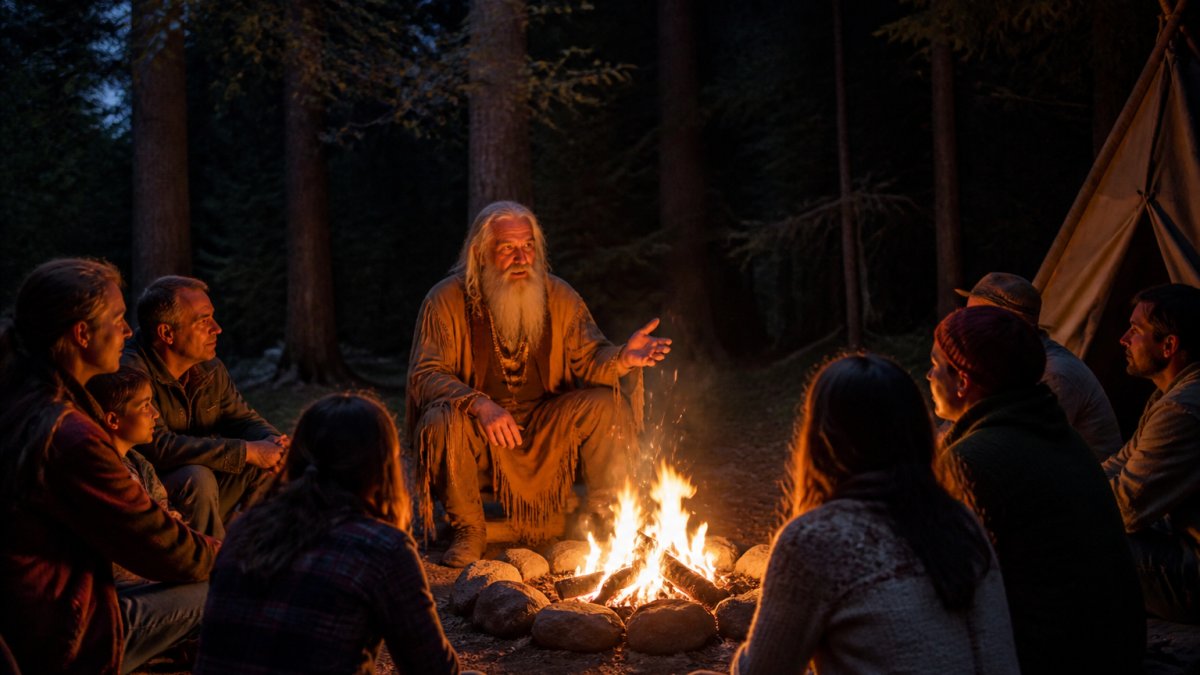
Most cryptids in folklore began as stories told aloud, long before anyone wrote them down. Oral tradition carried creature legends across generations, and each retelling reshaped the details. A warning about a dangerous river, a tale of a giant creature in the woods, a caution against wandering too far from camp: these stories served practical purposes and became cultural inheritance.
What most guides miss is that oral tradition is not a weak record. It is a living one. Stories adapt to their audience, which is why the same creature can appear with different features in neighboring regions.
Indigenous Stories and Cultural Attribution
Indigenous stories deserve careful handling. Many cultures have long traditions involving large, mysterious creatures, and those traditions carry spiritual and cultural meaning that sits well beyond the question of whether an animal exists. Treating Indigenous accounts purely as evidence for a zoological claim strips them of context. A common mistake is flattening distinct traditions into a single "ancient legend" bucket. The respectful approach is to name the culture, acknowledge the story on its own terms, and avoid claiming more than the source supports. For readers who want to explore these traditions further, Smithsonian Magazine's coverage of folklore and cultural history offers accessible context on how oral traditions are studied.
What Is the Oldest Known Cryptid?
The oldest known cryptid depends entirely on how you define the term. If you mean the oldest creature legend that resembles a modern cryptid, ancient accounts stretch back thousands of years across multiple continents. If you mean the oldest creature formally labeled a cryptid, the answer is modern by definition, since the word dates only to 1983.
This distinction is the single most useful thing to understand when asking where did cryptids originate. Ancient accounts describe mysterious animals in forests, rivers, and mountains. Modern cryptozoology retroactively applies its own label to those accounts. The Yeti traditions of the Himalayas, the Vanaras of the Ramayana, and the Sasquatch stories of the Pacific Northwest all predate the field that now studies them. None of those traditions called their creatures cryptids. That label is ours, not theirs.
Cryptids Around the World: Regional Legends
Cryptids around the world follow a strikingly similar pattern: a region with dense wilderness, a creature that fits the landscape, and a story that survives for generations. The specific animals change; the structure of the legend does not. But the details matter, and treating distinct traditions as interchangeable erases the cultural context that gives each story its meaning.
Cryptid National Parks Adult Coloring Book | Bigfoot, Mothman & Legendary →
North America, Asia, and Africa
North America's most famous entry is Bigfoot, also called Sasquatch. The name "Sasquatch" comes from the Salish word sasq'ets, used by Indigenous peoples of the Pacific Northwest. Bigfoot stories are rooted in those forests and carried forward by decades of reported encounters, but the creature also appears in the folklore of many other tribes under different names. In Asia, the Yeti of the Himalayas is known to Sherpa communities as yeti or michê, and the Yeren of China's remote mountains has been part of local lore for centuries. Africa contributes legends like the Mokele-mbembe of the Congo Basin, often described as a large reptile-like creature. The name comes from the Lingala language, and the story is tied to specific swamp and river systems. In East Africa, lake and forest legends vary by region, each with its own local name and details.
A pattern emerges: the stories cluster where wild terrain makes the question hard to settle. But the cultural meaning of each creature goes beyond the question of whether it exists. For many communities, these stories carry spiritual significance, serve as warnings, or explain natural phenomena. Treating them purely as zoological evidence strips them of that context.
| Region | Notable Cryptid | Cultural Attribution | Landscape Connection |
|---|---|---|---|
| Pacific Northwest | Bigfoot / Sasquatch | Salish and other Indigenous nations | Dense temperate forest |
| Himalayas | Yeti | Sherpa and Tibetan communities | High-altitude snow and rock |
| China | Yeren | Local mountain communities | Remote mountain wilderness |
| Congo Basin | Mokele-mbembe | Lingala-speaking communities | Swamp and river systems |
| East Africa | Regional lake legends | Various local groups | Lakes and forested reserves |
This table is not exhaustive, and it should not be read as claiming that all these traditions are the same. Each name, each story, and each cultural meaning is distinct. The respectful approach is to name the culture, acknowledge the story on its own terms, and avoid claiming more than the source supports. For readers who want to explore these traditions further, Smithsonian Magazine's coverage of folklore and cultural history offers accessible context on how oral traditions are studied.
How Cryptid Stories Spread and Change
Cryptid stories spread the way all folklore spreads: through conversation, then print, then broadcast, then the internet. Each medium reshapes the story. A local sighting becomes a regional legend, then a global one. Details drift. A blurry photograph circulates for decades. A misidentification becomes a fixed data point in someone else's retelling.
This transformation process is not a flaw in the stories. It is the mechanism that keeps them alive. The creatures endure because the stories adapt.
Evidence, Misidentification, and the Limits of Cryptozoology
Evidence quality is where cryptozoology draws its sharpest criticism, and the criticism is fair. A reported encounter is testimony, not proof. Photographs can be hoaxes or honest misidentifications of known animals. Footprints can be cast, faked, or misread. The field's central problem is that extraordinary claims require evidence that matches their weight, and that standard is rarely met.
This is where folklore and zoology split. Folklore explains why a story exists and what it means to a culture. Zoology asks whether a population of animals is actually out there, and it demands physical evidence. Both questions are legitimate. Conflating them produces bad folklore study and worse science. Misidentification explains a large share of reported encounters: a bear standing upright, a known animal at an odd angle, poor light, and an expectant mind. None of that makes the stories worthless. It just means the burden of proof stays where it belongs.
Conclusion
The honest answer to where cryptids come from is that the creatures are ancient and the label is new. Folklore built them; twentieth-century researchers named them; the internet keeps them alive. That tension between old stories and modern evidence is what makes the subject worth following. If you want to carry a piece of that story with you, our Cryptid National Parks Adult Coloring Book turns 25 fictional parks and their legendary residents into a screen-free escape, and our Washington Bigfoot Sightings notebook gives you 118 ruled pages for field notes and sketches. Shop Squatch Wear for cryptid gifts and apparel built for people who like their legends with a sense of humor.


Frequently Asked Questions
What does the word cryptid mean, and when did it originate?
The word cryptid comes from the Greek kryptos, meaning hidden. It was coined by John E. Wall in 1983 to describe a hidden or undiscovered animal. Cryptids are the creatures cryptozoologists study, and the term spread through the field after Bernard Heuvelmans and Ivan T. Sanderson popularized cryptozoology. The word is modern, but the stories behind cryptid origins stretch back through folklore and oral tradition for centuries.
What is the oldest known cryptid?
Pinpointing one oldest known cryptid is difficult because legends predate written records. Ancient accounts of mysterious animals appear in Greek, Chinese, and Indigenous oral traditions, often describing creatures that blend real animals with myth. The Yeti, Vanaras in the Ramayana, and various lake monsters have deep roots. Most cryptozoologists treat these as folklore rather than confirmed species, and the oldest claims rest on cultural history rather than physical evidence.
Which country has the most cryptids?
The United States and Canada, especially the Pacific Northwest, are famous for Bigfoot and Sasquatch reports. Scotland is known for Nessie, and China for the Yeti and other regional legends. Cryptids around the world appear in nearly every culture, so counting them is imprecise. North America simply has more documented sighting reports and media coverage, which makes its cryptid catalog look larger than elsewhere.
Why do different cultures have stories about mysterious creatures?
Cryptids in folklore often grow from real encounters with unfamiliar animals, misidentification, and the human tendency to explain the unknown through story. Oral tradition carried these tales across generations, and global folklore shows similar patterns in North America, China, Kenya, and beyond. Cultural history shapes how a creature is described, so the same unexplained sighting can become a spirit, a monster, or an undiscovered species.