

How Do You Pack Light for a Weekend Hiking Trip?
Last Updated: October 29, 2026
Quick Summary
To pack light for a weekend hiking trip, build from a fixed weekend backpacking packing list covering shelter, sleep, clothing, food, water, and safety, then cut weight by targeting the big three first: shelter, sleep system, and pack. Leave duplicates at home, repackage food and toiletries, and pack for the trip you are actually taking.
- Separate base weight from consumables, keeping base weight as low as your comfort allows.
- Weigh your shelter, sleep system, and pack first because they hold most of your base weight.
- Pack one base layer, one mid-layer, and one outer shell, wearing the base layer and carrying the rest.
- Choose calorie-dense foods like nuts, nut butters, oats, dried fruit, and freeze-dried meals.
- Check the forecast the night before and adjust your list by one layer or one water container.
Table of Contents
- Start With a Weekend Backpacking Packing List
- How to Reduce Backpack Weight Without Sacrificing Comfort
- Build Your Hiking Clothing Layers for Changeable Weather
- Choose Lightweight Backpacking Food That Actually Fuels You
- Pack Light for Day Hikes vs Multi-Day Trips
- Emergency and Safety Essentials You Cannot Leave Behind
- Get Trail-Ready With Squatch Wear Gear
- Frequently Asked Questions
Start With a Weekend Backpacking Packing List
The fastest way to learn how to pack light for weekend hiking trips is to build from a fixed list, not from a pile of "what if" items.
A heavy pack makes you slow, sore, and loud. Light packs move quiet and easy.
Start with these core categories:
- Shelter: tent or tarp, stakes, footprint
- Sleep: bag or quilt, pad, pillow stuff sack
- Clothing: one set worn, one set packed
Lay everything out first. Then weigh it.
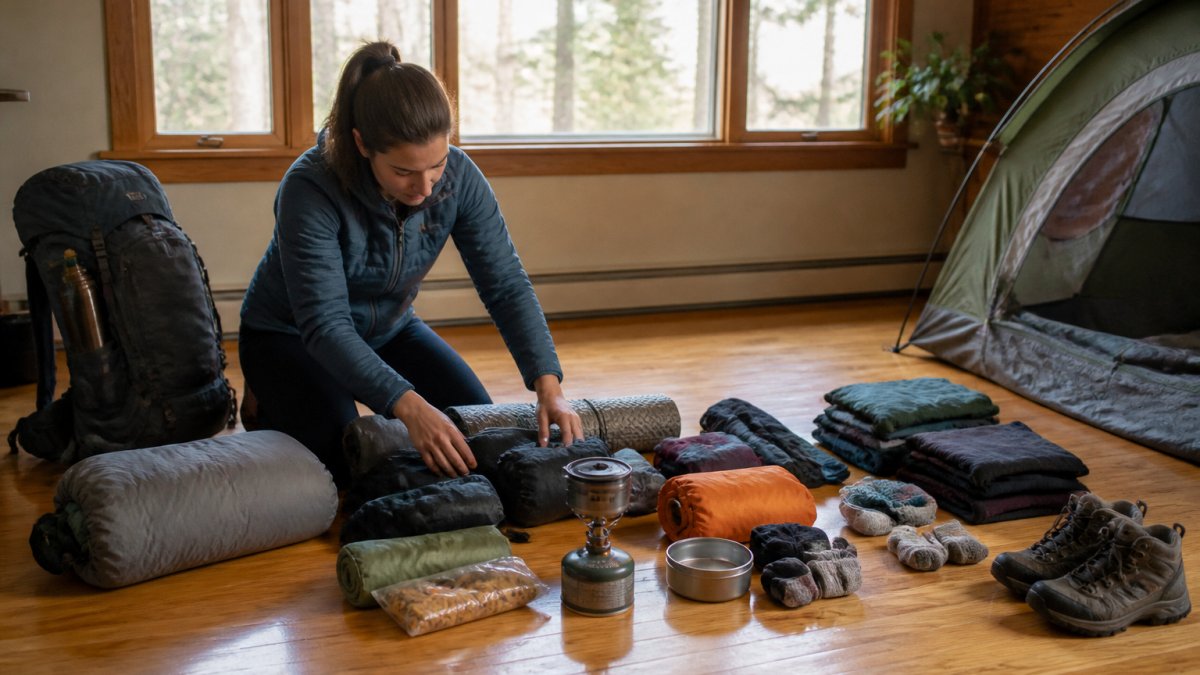
How to Reduce Backpack Weight Without Sacrificing Comfort
Cut weight in the right order and you keep the comfort that matters. The trick is to target the big three, shelter, sleep system, and pack, before you touch anything small.
Start by separating your load into base weight (everything except food, water, and fuel) and consumables.
Here is the order we recommend, with the reasoning behind each step:
- Weigh your shelter, sleep system, and pack first. These three items usually make up the largest share of base weight.
- Swap the heaviest item for a lighter version, but only if it fits your trip. A quilt instead of a bag, a foam pad instead of an inflatable, or a frameless pack instead of a framed one each trades comfort or convenience for grams. Choose the trade you will not regret at 2 a.m.
- Leave behind duplicates. Second stove, third knife, extra layers, a camp chair you use once. Lay every item on the floor and ask, "Did I use this on the last trip?" If not, it stays home.
- Repackage food and toiletries. Transfer shampoo, sunscreen, and soap into small dropper bottles. Repackage meals into zip bags and remove cardboard, cans, and foil.
- Trim straps and tags only after the big swaps. Cutting a few grams off a strap matters only once the heavy items are already handled.
A common mistake is buying ultralight socks while carrying a heavy tent. Fix the tent first.
Free and low-cost weight savings
You do not need a gear budget to drop pounds. These no-cost moves work on any pack:
- Leave the stuff sacks at home for items that do not need compression, and use one large liner bag instead of five small ones.
- Cut excess strap length on your pack and hip belt after a final fit.
- Remove tags, packaging, and manuals before you leave the house.
Load distribution matters as much as total weight
Keep heavy items close to your back and around your centre of gravity, mid-pack and high. That keeps you balanced on uneven ground. Put the sleeping bag and light clothing at the bottom, food and stove near the middle, and the heaviest dense items (water, fuel, food bag) against your spine between your shoulder blades. Keep items you need during the day, snacks, map, rain shell, in the lid or hip belt pockets so you are not unpacking the whole bag on the trail.
Build Your Hiking Clothing Layers for Changeable Weather
Hiking clothing layers are your adjustable thermostat on the trail. A three-part system, base layer, mid-layer, and outer shell, lets you add or shed warmth without carrying three separate outfits.
The system works like this:
- Base layer: moisture-wicking synthetic or merino wool next to your skin
- Mid-layer: fleece or light puffer for warmth
- Outer shell: waterproof, breathable jacket for rain and wind
Pack one of each, not two. Wear the base layer and carry the rest. That single rule saves a surprising amount of space.
For warm-weather weekend trips, a light tank works well as your base layer. Our Womens Outdoor Adventure Tank Camping Apparel Hiking Top Summer Fitness Wear Nature Lover Gift Travel Inspired Clothing is built for exactly that, and it packs down to nothing. For cooler mornings and changeable weather, the Bigfoot Adventure Long Sleeve Tee adds a layer without bulk.
Choose Lightweight Backpacking Food That Actually Fuels You
Lightweight backpacking food should give you the most calories per gram, not the most grams per meal.
Plan your food so you have enough energy for each day, and adjust up if you run cold or hike long days.
A simple weekend menu:
- Breakfast: instant oats with dried fruit
- Lunch: tortillas with nut butter and honey
- Dinner: one freeze-dried meal per person
Repackage everything into zip bags at home. You drop the boxes, save space, and cut weight at the same time.
For a fun trail-snack companion, our Trail Snack Patrol T Shirt is a favorite among hikers who take their snacks, and their Sasquatch sightings, seriously.
Pack Light for Day Hikes vs Multi-Day Trips
Day hikes and multi-day trips need different packs, and packing them the same way is a classic mistake. A day hike is about speed and a small load. A multi-day trip is about self-sufficiency. The difference is not just more stuff, it is a different packing logic.
Embroidered Sasquatch Footprint – Classic Low-Profile Adventure Hat →
Day hikes: speed and a small load
For a day hike, carry:
- Water and a filter or tablets
- Snacks and a light lunch
- Rain shell and a warm layer
A day pack should ride close to your back and stay light enough for comfort on steep terrain.
Multi-day weekends: self-sufficiency
For a one- or two-night weekend, add shelter, sleep system, stove, and a full food bag. Pack volume usually increases for multi-day trips. The pack itself should match the load you carry.
A useful rule: pack for the trip you are taking, not the trip you might take. A weekend trip does not need a week of supplies, and a summer overnight does not need a winter sleep system.
How weather changes the list
This is where most packing guides stay generic. The same weekend trip can require very different loads depending on the forecast and micro-climate.
- Hot and dry: Carry more water capacity, a sun hat, and electrolyte tablets. Leave the insulated jacket at home and swap the rain shell for a light wind layer if rain is unlikely.
- Cool and wet: Add a waterproof shell, rain pants or a rain kilt, and a pack cover or liner. Keep a dry set of sleep clothes in a waterproof bag, wet insulation loses most of its warmth.
- Cold mornings and warm afternoons: Pack a light puffer or fleece for camp and early starts, but choose a thin base layer you can hike in. Avoid carrying a heavy jacket you only wear for an hour.
A simple pivot method: check the forecast the night before, then remove one warm layer and one water container if the trip is warmer and drier than your default list, or add one shell layer and one dry bag if it is wetter and colder.
Compression and packing technique
Compression sacks help here. Stuff your sleeping bag and clothes into them, then pack the heavy items mid-pack. That keeps your load tight and your centre of gravity low. For a multi-day pack, line the inside with a trash-compactor bag or pack liner before loading, it weighs almost nothing and keeps everything dry even if rain gets past the pack fabric.
If comfort at camp matters to you, our guide on how to choose portable camping chairs vs folding stools in 2026 helps you weigh the extra weight against the payoff.
The right load depends on the trip, so here is how day hikes and multi-day weekends differ.
| Trip type | What to carry | Pack size or note |
|---|---|---|
| Day hike | Water, filter or tablets, snacks, light lunch, rain shell, warm layer | Small pack, 15 to 25 liters |
| Day hike | First aid kit, headlamp, map | Rides close to your back |
| Multi-day weekend | Add shelter, sleep system, stove, full food bag | Pack volume usually increases |
| Hot and dry | More water capacity, sun hat, electrolyte tablets | Leave insulated jacket at home |
| Cool and wet | Waterproof shell, rain pants or rain kilt, pack cover or liner | Keep dry sleep clothes in waterproof bag |
| Cold mornings, warm afternoons | Light puffer or fleece for camp and early starts | Choose a thin base layer you can hike in |
| High altitude or exposed ridges | Windproof layer and warm hat even in summer | Expect wind and rapid temperature drops |
| Humid or rainy multi-day | Quick-dry fabrics and a pack liner | Keep sleep system and spare clothes sealed |
Emergency and Safety Essentials You Cannot Leave Behind
Emergency and safety essentials are the items you hope never to use and never leave behind.
Pack these every time, day hike or overnight:
- First aid kit: blister care, pain relief, bandages
- Headlamp with spare batteries
- Navigation: map, compass, or a charged phone with offline maps
Blister prevention deserves its own spot. Wear well-fitted footwear and moisture-wicking socks, and treat hot spots the moment you feel them.
Leave No Trace principles apply to packing too. Pack out everything you bring in, and plan meals so you carry out scraps and wrappers.
Get Trail-Ready With Squatch Wear Gear
Getting trail-ready is about more than grams and liters. It is about gear that holds up, feels good, and tells a story you actually enjoy wearing.
Squatch Wear is a small family brand that prints on demand, with independent designs inspired by cryptids and the unexplained.
Before your next trip, grab the Embroidered Sasquatch Footprint - Classic Low-Profile Adventure Hat.

You do not need to believe in Bigfoot to enjoy the trail.
Frequently Asked Questions
What should I pack for a weekend hiking trip?
A weekend pack should cover shelter, sleep, food, water, and layers. Bring a tent or tarp, a sleeping bag rated for the forecast, a sleeping pad, a stove and fuel, lightweight backpacking food, 2-3 litres of water capacity, a map and compass, a first aid kit, a headlamp, and rain protection. Clothing should follow a three-layer system: base layer, mid-layer, and outer shell. Weigh everything at home and aim for a base weight (pack without food and water) under 7 kg.
How do I reduce backpack weight without spending a fortune?
Start by weighing every item and removing duplicates. Repackage food into zip-top bags, cut unnecessary packaging, and leave the camp chair at home. Wear your bulkiest layers on the trail instead of packing them. Share group gear like stoves and tents with a partner. These free changes often cut 2-3 kg. If you want to spend money later, replace heavy items one at a time, starting with your sleeping pad and cook system.
How much should a weekend hiking backpack weigh?
For a two-day trip, a total pack weight (including food and water) of 10-12 kg is a reasonable target for most adults. Experienced ultralight hikers often carry 7-9 kg. Your base weight, which is everything except food, water, and fuel, should ideally sit under 7 kg. If your pack feels heavy, remove items you did not use on your last trip and weigh again before the next one.
What can I leave out of my hiking pack to save weight?
Leave out backup clothing you will not wear, extra food beyond one emergency meal, heavy camp shoes, and full-size toiletries. Skip the folding chair, the large camera tripod, and multiple knives. Check the forecast and trust it: if no rain is expected, a lightweight wind shell may be enough. After each trip, audit what stayed at the bottom of your pack unused, and remove it next time.
The best weekend trips start with a pack you can carry all day and gear you trust. If you want apparel that keeps up without weighing you down, Squatch Wear has you covered with durable, comfortable designs, on-demand printing, and free shipping on orders over $75. Get started with Squatch Wear and hit the trail lighter, stranger, and ready for whatever is out there.
