

Campfire Cooking Accessories: A Beginner's Essential Gear Guide
Table of Contents
- Why Campfire Cooking Accessories Matter
- Essential Campfire Cookware for Beginners
- Campfire Cooking Tools You'll Actually Use
- Campfire Cooking Safety and Best Practices
- Choosing the Right Setup for Your Camping Style
- Common Mistakes Beginners Make
- Building Your First Campfire Cooking Kit
- Frequently Asked Questions
- Make Your Next Campfire Meal Part of the Adventure
Last Updated: October 10, 2026
Why Campfire Cooking Accessories Matter
There's something special about cooking outdoors. Whether you're making breakfast beside a quiet lake or preparing dinner beneath the trees, campfire cooking turns an ordinary meal into part of the adventure.
But cooking over an open fire is different from using a kitchen stove. Temperatures fluctuate, cookware gets hot, and having the wrong tools can make even a simple meal frustrating.
Fortunately, beginners don't need an expensive collection of equipment. A few carefully chosen campfire cooking accessories can make outdoor meals easier, safer, and more enjoyable.
This guide covers the essential cookware, utensils, safety equipment, and practical tips to help you build a beginner-friendly campfire cooking kit without buying things you don't need.
Essential Campfire Cookware for Beginners
Your cookware is the foundation of a reliable campfire cooking setup. The best choice depends on what you plan to cook, how you're traveling, and whether you're using a designated fire ring, cooking grate, or portable camping stove.
For beginners who primarily car camp, a cast-iron skillet and a sturdy cooking grate are versatile starting points. Lightweight campers may prefer cookware designed specifically for backpacking stoves.
Cast-iron skillets and Dutch ovens
A 10-inch cast-iron skillet is a versatile option for car camping. It can handle everything from eggs and pancakes to vegetables and one-pan dinners.
Cast iron retains heat well, but it also takes time to heat up and cool down. That makes careful temperature management important when cooking over coals.
For more elaborate meals, a campfire-rated Dutch oven opens up additional possibilities, including stews, baked potatoes, cobblers, and bread. Choose one designed for outdoor cooking if you plan to place coals beneath or on top of it.
Beginner recommendation: Start with a skillet you already own, provided it's suitable for campfire use. Add a Dutch oven later if you enjoy outdoor cooking and want to expand your options.
Grill grates and cooking surfaces
A sturdy cooking grate provides a stable surface for pots, pans, and food over a campfire. Some campsites include built-in grates, so check what's available before packing your own.
Portable grates come in different sizes and materials. Look for a model rated for direct campfire use, with enough stability to support your cookware.
Adjustable-height grates can make heat management easier. Raising cookware generally reduces the intensity of the heat, while moving it closer to hot coals increases it.
For beginners, stability and compatibility with your cookware matter more than having the most expensive setup.
Campfire Cooking Tools You'll Actually Use
You don't need an entire kitchen's worth of utensils to cook outdoors. A few dependable tools can handle most beginner meals while keeping your hands farther from hot cookware and coals.
Focus on equipment that's durable, easy to clean, and appropriate for the temperatures you'll encounter.
Tongs, spatulas, and utensils
Long-handled stainless-steel tongs are useful for turning food and moving items on a cooking grate. A sturdy spatula makes flipping burgers, pancakes, and other campfire favorites easier.
A heat-resistant serving spoon and a dedicated tool for safely repositioning coals can also be helpful, depending on your cooking setup.
Avoid using ordinary plastic utensils near direct flames, and keep metal handles away from hot surfaces when they're not in use.
Beginner recommendation: Pack long-handled tongs, a spatula, a serving spoon, and the utensils needed for your planned meals. Add specialized equipment only when you have a reason to use it.
Fire-starting gear and firewood management
Before packing fire-starting equipment, check whether campfires are permitted at your destination. Seasonal restrictions, drought conditions, and local regulations may prohibit wood fires.
Where fires are allowed, a reliable lighter, waterproof matches, and approved fire-starting materials can help you establish a controlled cooking fire.
Use locally purchased or approved firewood to reduce the risk of transporting invasive pests. Dry, appropriately sized wood generally burns more predictably than damp or green wood.
For cooking, a manageable bed of hot coals often provides more consistent heat than large, unpredictable flames. Use proper fire tools to reposition burning wood and coals rather than handling them directly.
Heat-resistant gloves and safe handling
Handling hot cookware requires proper protection. Choose gloves or mitts specifically rated for the temperatures and tasks involved in campfire cooking.
Leather gloves can help with some fire-handling tasks, but they are not automatically suitable for gripping extremely hot cookware. Follow the manufacturer's temperature ratings and instructions.
Keep gloves dry and in good condition, and use appropriate pot lifters or tools when moving Dutch ovens, skillets, and hot grates.
Campfire Cooking Safety and Best Practices
Cooking over a campfire can be enjoyable, but safety should always come first. Before lighting a fire, confirm that campfires are permitted and follow the rules established by the campground, park, or land-management agency.
Setting Up Your Cooking Fire Safely
Use an existing designated fire ring or approved cooking area whenever possible. Avoid constructing new fire rings or clearing vegetation without permission.
Keep tents, equipment, clothing, and other combustible materials a safe distance from the fire, following local guidance.
Have water and appropriate fire-control equipment nearby before lighting the fire. Never leave a burning campfire unattended, and supervise children and pets around the cooking area.
If wood fires are prohibited, consider an approved portable camping stove where regulations allow one.
Managing Heat While Cooking
Campfire temperatures can change quickly as wood burns and coals shift.
For more consistent cooking, use a stable cooking grate and adjust the distance between your cookware and the heat source when your equipment allows it.
A food thermometer is particularly important when preparing meat and poultry. Cook food to the appropriate safe internal temperature rather than relying on appearance alone.
Avoid testing fire temperature by holding your hand over flames or coals. Use suitable equipment and observe cooking results instead.
Preventing Burns and Handling Emergencies
Always use appropriately rated gloves, pot lifters, and long-handled utensils when working around hot cookware.
Keep loose clothing, hair, and combustible items away from flames. Remember that coals, metal grates, and cookware can remain dangerously hot long after visible flames disappear.
Never pour water onto a grease fire. For a small pan grease fire, if safe to do so, turn off or remove the heat source without moving the burning pan and cover it with a suitable metal lid. If the fire cannot be controlled safely, move away and seek emergency assistance.
Keep a first-aid kit accessible and know how to contact emergency services at your campsite.
Leave No Trace and Proper Fire Extinguishing
Responsible campfire cooking includes protecting the surrounding environment.
Follow local fire regulations and established Leave No Trace guidance. Burn only approved firewood, avoid leaving food scraps behind, and pack out cooking waste.
When extinguishing a permitted campfire, use water and stir the ashes and coals until everything is completely cool to the touch. Repeat as necessary, following the site's posted instructions.
Never bury hot coals, scatter them into surrounding vegetation, or leave a fire smoldering.
A clean, properly extinguished campsite protects wildlife, other visitors, and the forests we all enjoy.
Choosing the Right Setup for Your Camping Style
The best campfire cooking setup depends on how you camp. Someone staying beside their vehicle can bring heavier cookware, while a backpacker needs to consider weight, space, and fuel availability.
Before buying new equipment, think about the meals you want to prepare, the cooking facilities at your campsite, and how much gear you're comfortable transporting.
Car camping versus backpacking
Car camping: A cast-iron skillet, portable cooking grate, long-handled utensils, and a cooler can create a convenient outdoor kitchen. Weight is less restrictive, making it easier to prepare meals for several people.
Backpacking: Lightweight pots, compact utensils, and an appropriate backpacking stove are generally more practical than cast iron or heavy fire grates. In many wilderness areas, open fires are restricted or discouraged.
Beginner recommendation: If you're new to outdoor cooking, start with a simple car-camping setup where you can practice using your equipment without worrying about carrying everything long distances.
Budget tiers and what to prioritize
You don't need to spend hundreds of dollars to enjoy campfire cooking. Start with equipment you already own and upgrade based on your actual needs.
Basic setup: A campfire-safe skillet or pot, sturdy tongs, a cooking utensil, appropriate heat protection, and an approved heat source.
Expanded setup: Add a Dutch oven, portable grate, food thermometer, and storage containers for more varied meals.
Advanced setup: Consider specialized cooking equipment only after you've learned which meals and cooking methods you enjoy most.
Prices vary significantly by brand and material, so prioritize safety, durability, and usefulness over buying a complete matching set.
Remember that many established campgrounds already provide fire rings or cooking grates, which may reduce what you need to purchase.
Common Mistakes Beginners Make
Most campfire cooking frustrations come from a handful of avoidable mistakes.
1. Bringing too much equipment. Start with a few versatile tools instead of packing an entire kitchen.
2. Cooking over flames that are too intense. When using a permitted wood fire, a controlled bed of coals can provide more manageable heat.
3. Forgetting food safety. Keep perishable ingredients properly chilled, prevent cross-contamination, and use a food thermometer.
4. Using unsuitable cookware. Make sure pots, pans, and utensils are rated for the heat source you're using.
5. Ignoring fire restrictions. Always check campground rules and current fire conditions before your trip.
6. Failing to plan cleanup. Bring water, cleaning supplies, and containers for packing out food scraps and other waste.
Avoiding these mistakes makes outdoor cooking easier and helps protect the places you're visiting.
Building Your First Campfire Cooking Kit
Building a beginner campfire cooking kit doesn't need to be complicated. The goal is to pack enough equipment to prepare simple meals safely without bringing unnecessary extras.
Start with a basic setup, test it at home, and adjust your packing list after each trip.
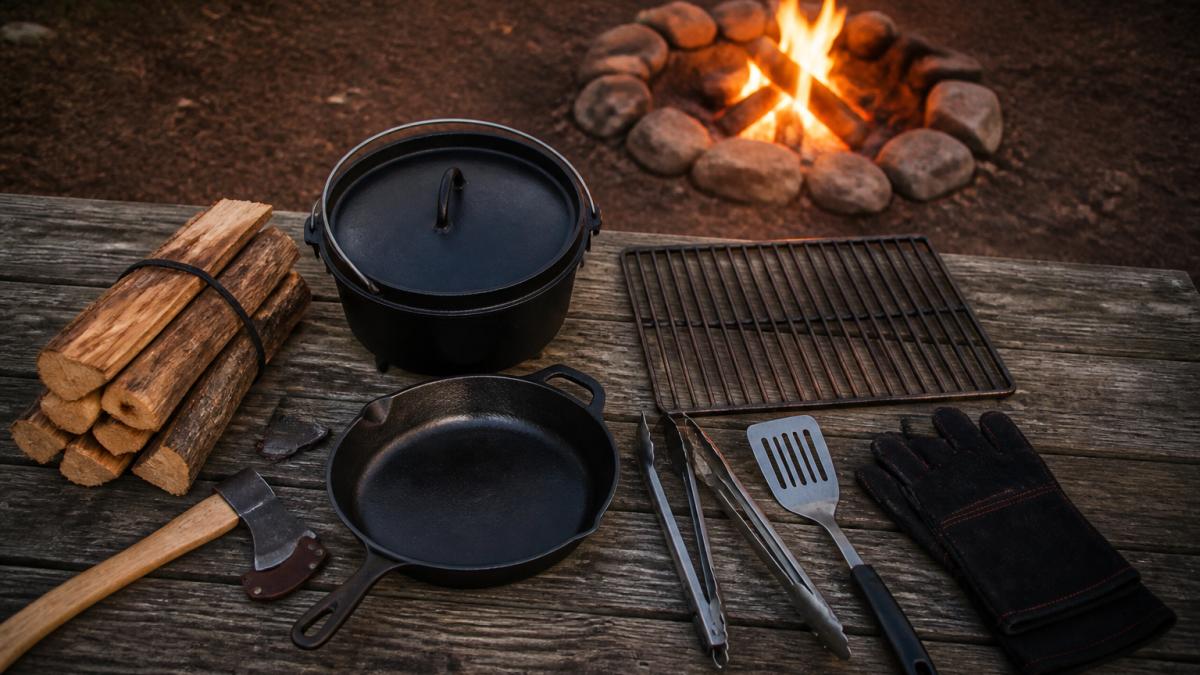
Beginner campfire cooking essentials, including a Dutch oven, cooking grate, and firewood.
Your essential first kit
For a simple car-camping kitchen, consider packing:
- A campfire-safe skillet or cooking pot
- A sturdy grate, if your campsite doesn't provide one
- Long-handled tongs and a spatula
- Appropriately rated heat-resistant gloves or pot holders
- A food thermometer
- An approved fire starter or camping stove
- Cleaning supplies and a container for food waste
Choose equipment based on the meals you plan to prepare. A single pot may be enough for simple soups or one-pot dinners, while a skillet offers more flexibility for breakfast and grilling.
Keep your cooking equipment together in a dedicated storage container so it's easy to check before each trip.
Seasoning and preparing cast iron before your first trip
Many cast-iron skillets come preseasoned and are ready to use after an initial wash and thorough drying.
If your cookware needs seasoning, follow the manufacturer's instructions. Generally, seasoning involves applying a very thin layer of suitable oil and heating the cookware to create a protective cooking surface.
Avoid applying thick layers of oil, which can leave a sticky finish.
Before camping, inspect your skillet for rust or damage and make sure it's clean, dry, and ready to pack.
Cleaning cast iron and other cookware in the field
Allow cookware to cool enough to handle safely before cleaning.
Remove food residue with a scraper or brush, using a small amount of water and mild dish soap when appropriate for the cookware.
Dry cast iron thoroughly after washing to help prevent rust. If needed, apply a very thin layer of cooking oil before storing.
Follow campground wastewater rules, and never dump grease, food scraps, or soapy water directly into lakes, streams, or other natural water sources.
Pack out food waste and dispose of wastewater according to the site's requirements.
Storage and maintenance between trips
Store cookware in a clean, dry location between trips. Make sure cast iron is completely dry before packing it away.
Inspect cooking grates, utensils, and handles for damage before each outing. Replace equipment that is cracked, unstable, or otherwise unsafe.
Check your fire-starting supplies, food-storage containers, and cleaning materials before leaving home.
A quick equipment check can prevent forgotten essentials and unexpected problems at camp.
Practice at home before your trip
Before your first camping trip, practice preparing a simple meal with your cookware at home.
Learn how your skillet heats, how long different foods take to cook, and which utensils are most comfortable to use.
If you plan to cook outdoors, practice only in an approved, safe setting and follow all applicable fire restrictions.
The more familiar you are with your equipment, the easier it will be to enjoy cooking once you reach your campsite.
Frequently Asked Questions
What campfire cooking accessories should beginners buy first?
Start with a campfire-safe skillet or pot, sturdy tongs, a cooking utensil, appropriate heat-resistant gloves, and a stable cooking surface if your campsite doesn't provide one. A food thermometer is also important for safely preparing meat and poultry. Choose additional equipment based on the meals you plan to cook.
Is a campfire tripod necessary for campfire cooking tools?
No. A tripod can be useful for suspending suitable cookware over a permitted campfire, but beginners can often use an existing campsite cooking grate or a stable, purpose-built cooking setup. Make sure any tripod is rated for the weight and heat involved.
How do you control heat when cooking over a campfire?
Use a controlled bed of coals and adjust the distance between the cookware and heat source when your equipment allows. Different areas of the cooking surface may provide different heat levels. Monitor food closely and use a food thermometer to verify safe internal temperatures.
What cookware is safe to use over a campfire?
Cast iron and suitable stainless-steel cookware are common choices, provided the manufacturer rates them for open-fire cooking. Avoid cookware with handles, coatings, or components that cannot tolerate high heat. Always use appropriate protective equipment when handling hot cookware.
Make Your Next Campfire Meal Part of the Adventure
Great campfire cooking isn't about having the most expensive gear. It's about keeping things simple, preparing ahead, and enjoying the experience of being outdoors.
Whether you're making coffee at sunrise or sharing dinner beneath the stars, the right equipment helps you spend less time worrying about your setup and more time enjoying the moment.
At Squatch Wear, we celebrate the adventurous side of life with Bigfoot-inspired apparel, outdoor-themed accessories, and gifts for people who feel most at home beyond the pavement.
Pack your essentials, respect the wilderness, and enjoy the adventure.