

15 Easy Outdoor Activities for Toddlers & Families
Getting toddlers outside doesn't require a long hike, expensive gear, or a perfectly planned family outing. Some of the best outdoor adventures happen in the backyard, at a neighborhood park, or on a short nature walk where little explorers can move at their own pace.
Below are simple outdoor activities for toddlers and families, from bubbles and scavenger hunts to farms and nature preserves. We've also included practical ideas for what to pack, what to wear, and how to keep outings manageable when little legs—and attention spans—run out of steam.
Table of Contents
- 1. Easy Outdoor Activities for Toddlers: Start With What You Already Have
- 2. Outdoor Games for Toddlers That Burn Energy (and Don't Need Much Gear)
- 3. Nature Activities for Toddlers: Playgrounds, Parks, and Preserves
- 4. Outdoor Activities for 1 Year Olds: What Actually Works at That Age
- 5. Farms, Fruit Picking, Gardens, and Zoos: Bigger Family Adventures
- 6. Rainy Days, Cold Snaps, and Backup Plans for Outdoor Time
- 7. What to Pack and Wear: Practical Outing Logistics for Toddler Families
- Frequently Asked Questions
Last Updated: October 7, 2026
1. Easy Outdoor Activities for Toddlers: Start With What You Already Have
The best outdoor activities for families with toddlers rarely require a special trip.
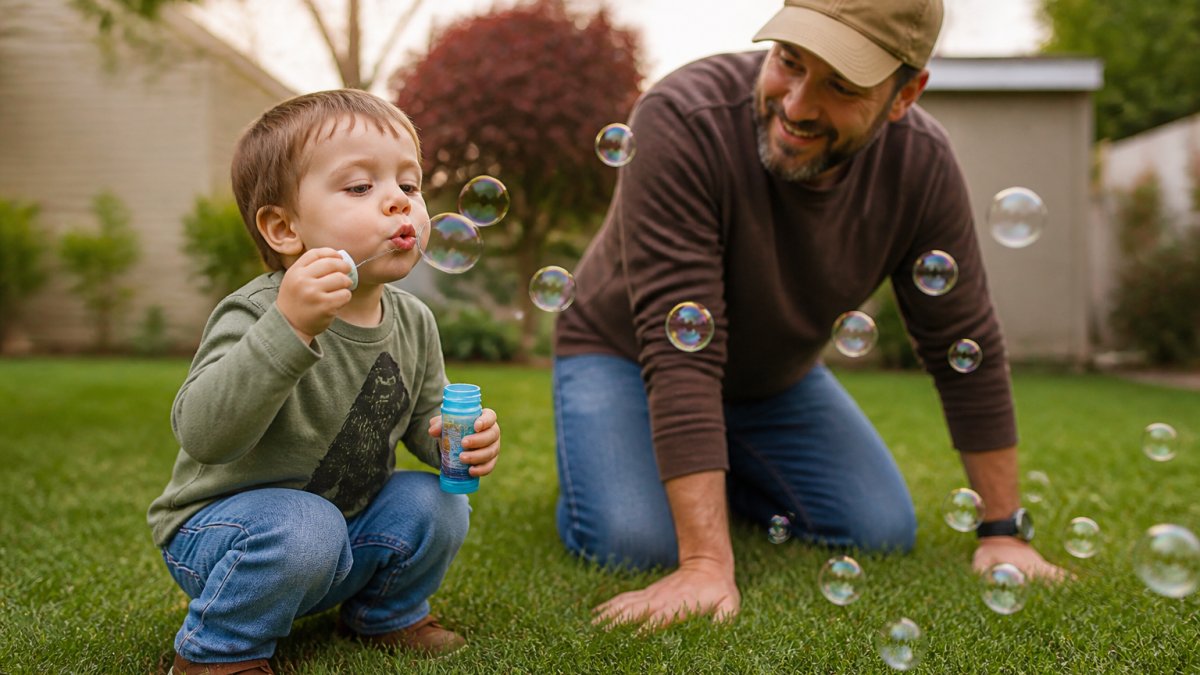
Toddlers do not need a destination. They need something to pour, something to chase, and someone to watch them do it.
For cooler days, a comfortable long-sleeve tee gives little explorers an easy layer for backyard play, nature walks, and everyday adventures.
Nature Scavenger Hunts and I Spy Walks
A nature scavenger hunt turns a slow walk into a mission. For toddlers, keep the list visual and simple: find a leaf, a rock, a stick, something yellow. You do not need a printed sheet.
I Spy works on the same principle. "I spy something green" teaches color recognition while keeping little legs moving. These are the easiest of all easy outdoor activities for toddlers because they require zero setup and work in any season.
2. Outdoor Games for Toddlers That Burn Energy (and Don't Need Much Gear)
Outdoor games for toddlers should be short, silly, and repeatable. If a game needs instructions longer than one sentence, it is probably too complex for this age group.
Obstacle Courses, Pick-Up Sticks, and Backyard Camping
An outdoor obstacle course can burn plenty of energy without requiring a trip to the park.
Pick-up sticks is another winner. Scatter a handful of sticks on the grass and have your toddler gather them into a bucket. It sounds too simple to work. It works.
Backyard camping is the low-effort version of a real camping trip. If the family loves the outdoors, the Youth Adventure Tee is perfect for kids who are happiest outside, featuring a fun mountain graphic that matches their energy.

3. Nature Activities for Toddlers: Playgrounds, Parks, and Preserves
Nature activities for toddlers work best when the destination has a built-in activity. Playgrounds, parks, and nature preserves all offer that, and all three are usually free.
Slides, Swings, and Accessible Play Features
A playground with a toddler-sized slide and bucket swings covers the basics. Look for accessible play features like ramped structures, ground-level play panels, and smooth rubber surfacing.
For a one-year-old, the swing is often the highlight. Many parents find that a bucket swing and a short slide are all a toddler needs for a full morning.
Nature Walks, Lakes, and Waterfalls
A nature walk does not need to be a hike. A flat, paved loop of half a kilometer is plenty for toddler legs. The point is fresh air and discovery, not distance.
Lakes and waterfalls add a big payoff for very little effort. A short boardwalk to a viewing point gives kids a real destination, and the water itself holds attention.
4. Outdoor Activities for 1 Year Olds: What Actually Works at That Age
Most lists of outdoor activities for 1 year olds are written for a generic "child." That is a problem, because a 12-month-old and a 23-month-old are developmentally different people. A toddler who is cruising furniture has different outdoor needs than one who is running, climbing, and refusing the stroller.
A useful way to think about it is by mobility stage, not by birthday.
Match the Activity to the Mobility Stage
Crawling or cruising: Choose a safe, contained surface with plenty of room to explore.
Newly walking: Keep activities simple and close to home, with plenty of opportunities to stop and explore.
Running and climbing: Try simple obstacle courses, playgrounds, scavenger hunts, and short nature walks.
Follow Their Energy and Attention
Toddler attention and energy can change quickly. Rather than planning around a strict schedule, choose activities that are easy to shorten, extend, or abandon altogether. Watch your child's cues and be ready to switch activities when interest fades.
What to Skip at This Age
Plan around your child's usual sleep, meal, and energy patterns. When possible, head out when they're rested and fed rather than trying to fit an outing into an already busy day.
Eco-Friendly Toddler Long Sleeve Tee – Unique Graphic Tee for Boys & Girls →
Safety and Supervision Basics for the Littlest Explorers
Young children require close, active supervision around water, playground equipment, roads and other outdoor hazards. Follow age-appropriate safety guidance and the rules for the specific activity or location.
5. Farms, Fruit Picking, Gardens, and Zoos: Bigger Family Adventures
Farm visits, fruit picking, gardens, and zoos turn a normal day into a family adventure.
Fruit picking works well for toddlers because it is hands-on. U-pick farms let kids pick strawberries, apples, or pumpkins at their own pace, and the payoff is immediate.
Gardens and zoos offer wildlife and plants without the physical demands of a hike. Look for gardens with paved paths and zoos with a toddler-friendly petting area.
A farm or zoo trip is also a good excuse to dress the part. The Baby Squatch Organic Onesie is perfect for little explorers in training, with a cute walking sasquatch graphic on soft, eco‑friendly fabric.

Activity |
Best Age |
Typical Duration |
Cost |
Stroller-Friendly |
|---|---|---|---|---|
Backyard bubbles |
1-3 years |
20-30 min |
Free |
Yes |
Nature scavenger hunt |
2-4 years |
30-45 min |
Free |
Yes |
Playground visit |
1-4 years |
45-90 min |
Free |
Yes |
Nature walk |
2-4 years |
30-60 min |
Free |
Usually |
Fruit picking |
2-5 years |
1-2 hours |
Per pound |
Sometimes |
Zoo or garden |
1-5 years |
2-3 hours |
Admission fee |
Yes |
6. Rainy Days, Cold Snaps, and Backup Plans for Outdoor Time
Weather will cancel some outings. The fix is a backup plan that still gets kids outside, even briefly.
For rain, try a covered porch with bubbles or chalk on a dry patio. The goal is fresh air and movement, not a perfect trip. guidance from the American Academy of Pediatrics on outdoor play notes that outdoor play supports physical development even in short bursts.
If a full outing is not possible, move the activity indoors but keep the outdoor spirit. A nature scavenger hunt can run inside with houseplants and windows. An obstacle course works in a hallway.
7. What to Pack and Wear: Practical Outing Logistics for Toddler Families
Packing for a toddler outing is less about gear and more about backup. Assume one outfit change, one snack, and one unexpected stop. The families who seem to glide through outings are usually the ones who planned around nap time, packed a single bag the night before, and set a realistic duration before leaving the driveway.
Time the Outing Around the Nap, Not the Calendar
A common pattern is that the best window for a toddler outing is the 60-90 minutes right after a morning nap or right after lunch, before the afternoon energy dip. Trying to squeeze an outing into the pre-nap stretch usually ends in a meltdown at the destination rather than on the way home. If a destination is more than 30 minutes away, plan to arrive with at least an hour of awake, fed, and changed toddler time ahead.
Set a Realistic Duration Before You Leave
Duration expectations vary by activity and age:
- Backyard play: 20-40 minutes
- Playground visit: 45-90 minutes
- Nature walk on a flat path: 30-60 minutes
If the plan is longer than the toddler's typical awake window, build in a stroller or carrier break rather than pushing through.
The Essentials List
- A spare outfit, since mud, water, and spills are guaranteed
- Snacks and water, because hungry toddlers do not negotiate
- Sunscreen and a hat for sunny days
Dress the Whole Family for the Weather
Dress kids in layers and pick fabrics that handle dirt and repeat washes. The Women’s Outdoor Adventure Tank is a breezy racerback that keeps you cool while you climb, wander, and wander some more. If you want the whole crew in on the fun, the Nature‑Inspired Adventure Tee features a scenic outdoor graphic that works anywhere, from work‑from‑home days to weekend camping trips.

Cost Expectations
Many of the best toddler outings are free: backyard play, playgrounds, nature walks, and scavenger hunts. Paid outings tend to be farms, gardens, and zoos, where admission or per-pound picking costs add up quickly. Checking a destination's website for current hours and pricing before leaving avoids surprises, especially on weekends.
Frequently Asked Questions
What are some fun and easy outdoor activities for a 1-to-2-year-old child?
For 1-to-2-year-olds, stick with simple sensory experiences: blowing bubbles, splashing in a shallow water bin, chalk scribbling on pavement, or a short nature walk where they can touch leaves and watch birds. These outdoor activities for toddlers need no complex setup and match their short attention spans. Keep sessions to 20-30 minutes and follow their lead. If they want to stop and inspect a single rock for ten minutes, that is the activity.
What outdoor games for toddlers are safe and easy to set up?
Safe toddler games include an obstacle course made from cushions or cones, a nature scavenger hunt with pictures instead of words, I Spy on a walk, and pick-up sticks with large, smooth sticks. Avoid games with small parts, hard projectiles, or competitive rules that frustrate little ones. Always supervise around water, slopes, and playground equipment. The best outdoor games for toddlers are the ones they can start, stop, and restart without adult rescuing.
What should toddlers wear for outdoor play?
Choose comfortable clothing suited to the weather and activity. Lightweight layers make it easier to adjust as temperatures change, while clothes that are easy to wash are useful for muddy, messy outdoor play. Add appropriate footwear, sun protection, or rain gear depending on conditions.
What should I pack for an outdoor day with a toddler?
Pack more snacks and water than you think you need, plus a spare set of clothes, wipes, sunscreen, a hat, and a light layer for changing weather. Bring a stroller or carrier if the destination has uneven paths, and check ahead for accessible play features or paved trails. A small bag of bubbles, chalk, or a nature scavenger hunt card can rescue a meltdown. Dress your toddler in comfortable, durable clothing like a graphic tee that handles dirt and repeated washes.
What are fun outdoor activities for toddlers on a rainy day?
Rainy days do not have to mean staying inside. Suit up in rain boots and a waterproof jacket and let toddlers stomp in puddles, float sticks in gutter streams, or watch worms surface on the sidewalk. If the weather is too severe, bring nature indoors with a backyard camping setup in the living room, a sensory bin with leaves and pinecones collected earlier. The goal is keeping the outdoor spirit alive.